Substack
Solar Woes For TN As Summer Looms
Green energy should have been a boon but it has become a bane due to lack of policy foresight

Sandhya Ravishankar
Substack
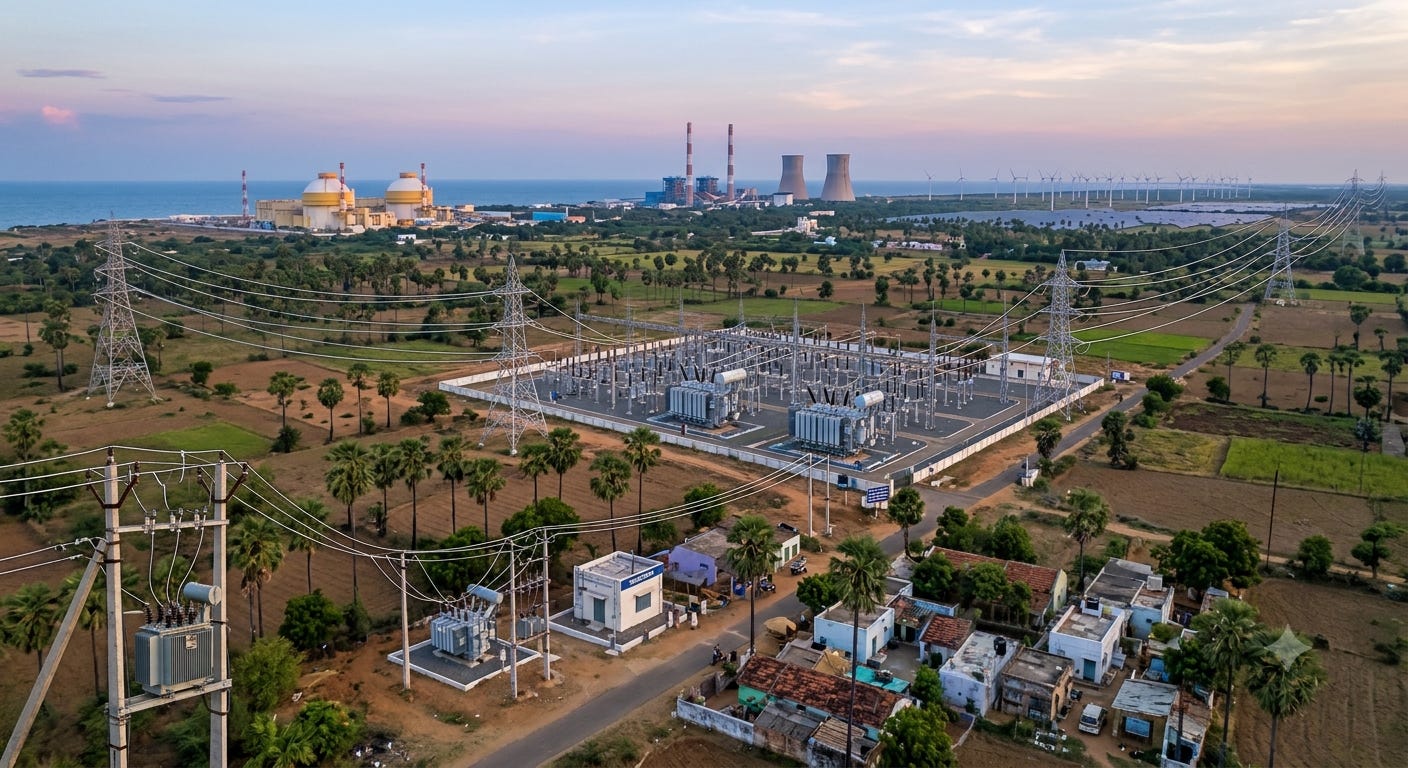
Tamil Nadu’s state power utility TNPDCL issued tenders to buy power from gas-fired thermal plants, among the costliest power purchases.
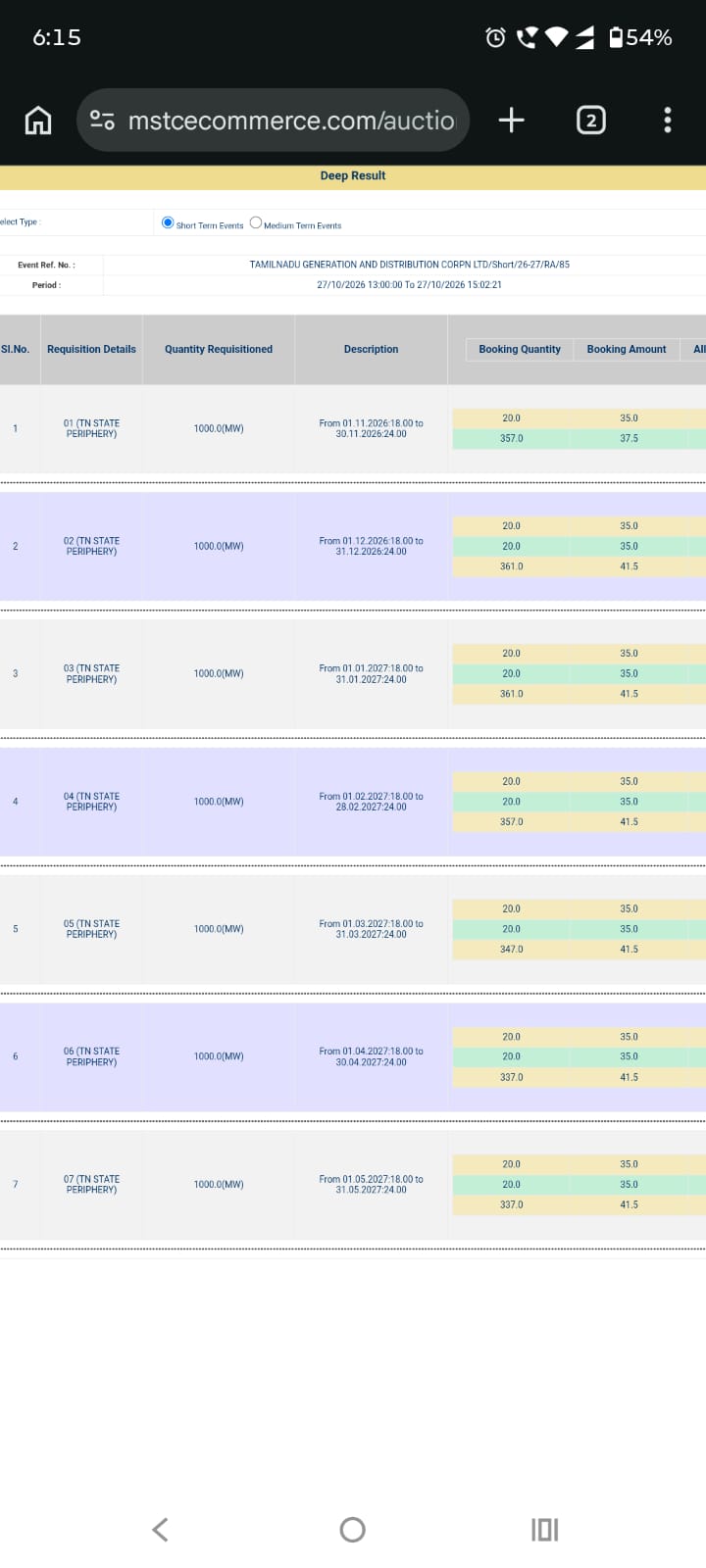
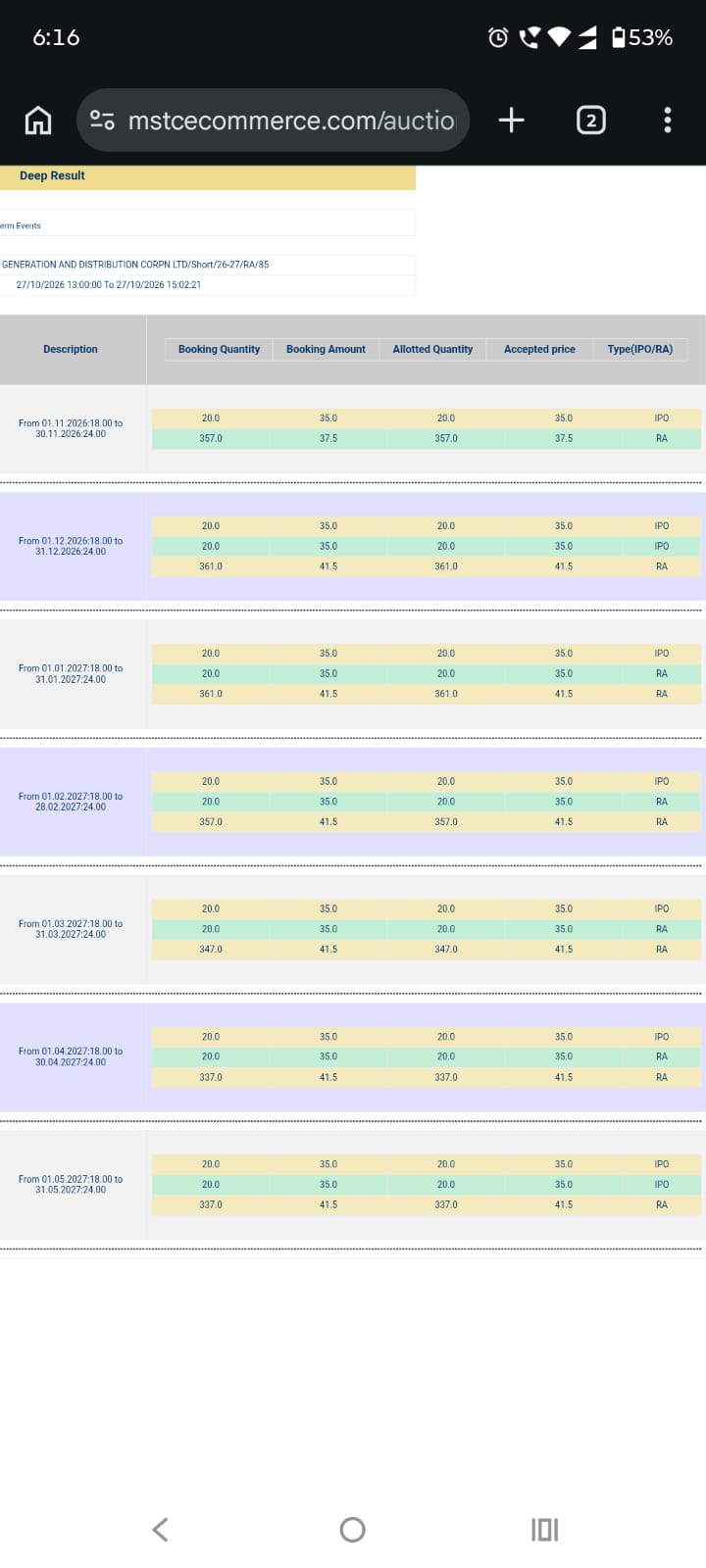
When they opened the bids, the prices per unit of power ranged from an exorbitant ₹35 to ₹41.50.
The tenders were for power purchase between November 01, 2026 to May 31, 2027. And all of them are for power between 6 p.m. and midnight.
Understandably, the utility wants to seal up power purchases ahead of the impending summer of 2027.
But Tamil Nadu has a peculiar problem. The state has a record 13,909 MW of solar power generation. Which means, when the sun shines, power is aplenty.
But during the times before and after the generation of solar power, which is between 8 a.m. and 4 p.m., power generation drops. And that's when the peak demand picks up.
Before we delve into this further, allow me to explain how the power grid works in layperson terms.
How the Power Grid Works
Imagine a pool of drinking water, maybe a lake. There is a person A who produces water and wants to sell it only to person B. But since there is no pipeline connectivity between A and B, A pours the water produced by him into the lake.
B has an understanding with the manager of the lake. B can take the amount of water from the lake as agreed with A at the rate prescribed by A.
But the source of water is only one lake. So C, D and others also take water at the same lake and pay the manager of the lake.
If there is a higher demand for water at some point and the price of water goes up, B continues to pay the same rate, but the manager loses the difference amount.
In our example, A is the solar power generating company. B is an industry. The manager is TNPDCL.
This is not an exact characterisation of how the grid works. It is only for simplifying purposes.
The Hitch
There is no dearth of power during the day since solar power kicks into the grid. This is between 8 a.m. and 4 p.m.
But before solar power kicks in — 6 a.m. to 8 a.m. — industry and peak household demand kicks in. Many industries begin work at 6 a.m.
From 4 p.m. to 6 p.m., industries continue to run. But from 6 p.m. to midnight is when the air conditioners and air coolers at homes are running. Which is why the tenders issued by the power utility are for between 6 p.m. and midnight.
The demand rockets up to around 20,200 to 21,200 MW daily during peak hours.
The power utility has only limited sources of power at its disposal — coal-based thermal plants, lignite-based thermal plants, gas-based thermal plants, hydro powered plants, wind powered plants, nuclear plants and solar powered plants.
Of these, only gas-powered thermal plants can be switched off and on for short durations. The others provide continuous supply.
Tamil Nadu needs power only for a few hours during the peak period of 6 p.m. to midnight and 6 a.m. to 8 a.m.
That is why tenders have been issued for only gas-powered plants, to fill the gap during peak demand hours.
Unfortunately, for such short term power purchases, gas-powered generators need to buy gas on the spot market. Thanks to the Iran war, gas is at approximately ₹294.70 per mmBTU on MCX on October 28, 2026.
And hence the state power utility is in a bind.
The next set of tenders are likely to be for battery stored power. This power can be stored and used when the state needs it. Medium to long term gas-based power could also be an option.
Simultaneously, the state will also have to work on quickly building battery storage infrastructure so that it can harness the power of the sun and provide power during peak demand hours with the flick of a switch.
Mismanagement of the power infrastructure in the state and a lack of vision to shore up power through batteries, have resulted in this situation.
And therefore the headlines about costly power purchases.
One thing is for sure. With limited options in front of the power utility, Tamil Nadu residents could still face the brunt of power cuts in the summer of 2027. There could also be restrictions on power usage during peak hours. Finally, the biggest deterrent — higher price slabs for peak hour usage could come into force.
The near-term future looks rather bleak as far as power purchases go.
Originally published on Substack. Open the original.
Read the next one by email
Support this work
A UPI payment, if you would like to.