Substack
Covid-19 Most Likely Was The Result of a Lab Leak: Part 1
Overwhelming evidence, hidden beneath layers of obfuscation, now show that Covid-19 was a disaster waiting to happen in a lab

Sandhya Ravishankar
Substack
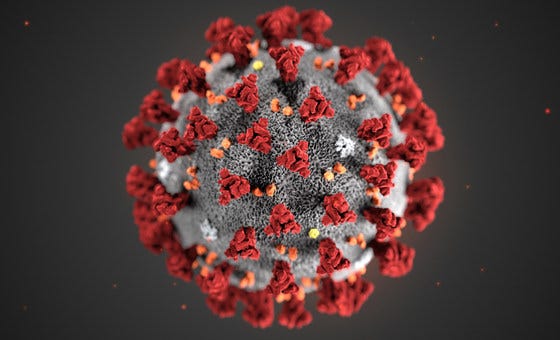
It is singularly surprising that the Indian media has barely touched upon the furious debate over the origins of the Covid-19 virus. Many scientists have been crying hoarse about the virus having leaked from a lab in Wuhan, China.
Another group of scientists, wielding enormous political clout, shut down the hypothesis of a lab leak early on in the pandemic.
Global bodies like the World Health Organisation (WHO) as well as the media followed suit, parroting the hypothesis that the virus jumped from bats to pangolins to humans.
What no one told us was that the natural origin hypothesis had little evidence to support it. The virus was supposed to have jumped from bats to an intermediary host eg: pangolins to humans. Six years later, no intermediary host has been found to be infected.
The lab leak theory, on the other hand, has overwhelming circumstantial evidence. Occam’s Razor must be kept in mind — the simplest explanation is usually the best one and indeed even the right one.
Let us look at the timeline of events that took place, well before the pandemic hit the world. This provides crucial perspective to the geo-political frame in which the virus most likely was created.
COVID ORIGINS TIMELINE
2012
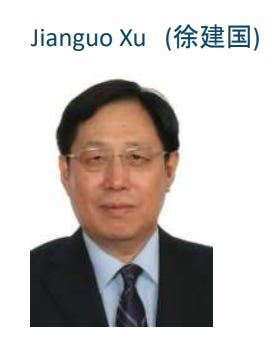
China began its Big Coronavirus Project. The project was titled “Discovery of animal-derived pathogens and their pathogenicity to humans” and was proposed by Xu Jianguo of the Institute for Infectious Disease Prevention and Control. This is an institute that comes under the government’s Chinese Center for Disease Control and Prevention.
The aim of this project was to collect samples of viruses from bats, mosquitoes, rats ticks & Himalayan marmots. Chinese researchers would then study whether these coronaviruses would infect humans and how infectious they were. The project aimed to discover at least 25 new pathogens.
Xu Jianguo, the project leader, is an expert on disease outbreaks. He was the Director of the National Institute for Communicable Disease and Prevention. He got funding to the tune of 18 million yuan for this umbrella research project — this is equivalent to $2.7 million (assuming 1 yuan = $0.15).
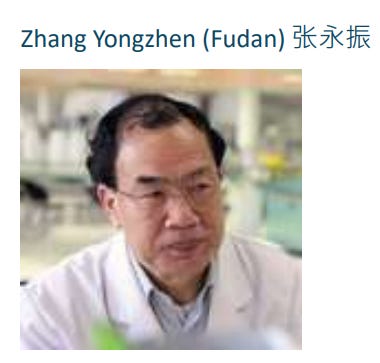
Jianguo’s research team comprised of Shi Zheng-Li, popularly known as China’s ‘Batwoman’, Liang Guodong, Zhang Yongzhen and Cao Wuchun.
Shi Zheng-Li from the Wuhan Institute of Virology got 2.9 million yuan in funding for research on bat coronaviruses.

Liang Guodong from the Institute of Viral Disease Prevention and Control got a similar 2.9 million yuan in funding for mosquito coronaviruses.
Zhang Yongzhen from the Zoonoses Laboratory of the National Natural Science Foundation of China got another 2.9 million yuan funding for research on rodent coronaviruses.
Cao Wuchun from the Academy of Military Medical Sciences of the Chinese People’s Liberation Army got an unknown grant for researching tick viruses. Wuchun being part of the project shows the keen interest and involvement of the Chinese Military in research into coronaviruses.
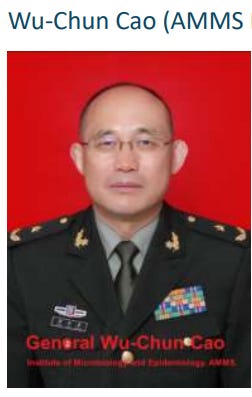
Credit is due to @TheSeeker268 on X.com who has done immense OSINT research along with the DRASTIC team to uncover documents on the origins of Covid-19.
2012 Continued…
The Mojiang Cave “Pneumonia”
In April 2012, six miners were cleaning an abandoned copper mine in Tongguan, Mojiang in Yunnan province.
Four of the miners worked for 14 days, one of them worked for 5 days and another miner worked for four days.
All of them developed respiratory problems and were hospitalised. Three of the miners died.
The symptoms in these infected miners were chillingly similar to Covid-19 symptoms: cough, fever, aching limbs and headache. Some miners developed pulmonary thrombosis.
Blood samples of these miners were sent to the Wuhan Institute of Virology for testing.
It was found that the mine was filled with Chinese horseshoe bats which harbour viruses similar to the coronavirus that caused the SARS epidemic, which killed over 5,300 people in China in 2002.
A Short Introduction to Coronaviruses
They are a type of virus which have crown-like spikes on the surface.
The flu is caused by some types of coronaviruses.
SARS & MERS were caused by coronaviruses.
Coronaviruses can be classified into alpha, beta, gamma and delta.
Covid-19 is a beta coronavirus.
Following the outbreak, Dr Shi Zheng-Li, along with her team, caught a large number of bats from the Mojiang mine.
Sample collections were done four times between August 2012 and July 2013.
A total of 150 alphacoronaviruses were found by the Wuhan Institute of Virology.
Two betacoronaviruses were found, of which one was a coronavirus similar to the virus that caused SARS. This sample (believed to have been found in an anal swab of a bat) was named CoV/4991 or Ra4991, according to Shi Zheng-Li.
This sample CoV/4991 or Ra4991 was analysed and its genetic structure was sequenced. This sequence was named RaTG13 — with 96.2% similarity, it is one of the closest genetic relatives to the Covid-19 virus that caused the pandemic.
Zheng-Li claimed that “13 means it was collected in 2013, and TG is the abbreviation of Tongguan town, the location where the sample was collected.”
January 1, 2013 to December 31, 2017
Shi Zheng-Li and her team collected over 16,000 bat fecal, swab, and tissue samples from 22 provinces in China. These samples were analysed on breathtaking scale. The team claimed to have discovered many new viruses.
They claimed that they had, for the first time globally, discovered 10 new bat virus species, which included at least two coronaviruses.
The bat sample named CoV/4991 or Ra4991 was taken in 2013, claimed Shi Zheng-Li in an interview to Science magazine.
2014
The story now moved to the United States.
On June 01, 2014, the American government’s National Institutes of Health (NIH) and the National Institute of Allergy and Infectious Diseases (NIAID) approved $3.5 million in funding to a non-profit called EcoHealth Alliance. The funding was for research into “Understanding the risk of bat coronavirus emergence”.
This funding had sub-awards to the Wuhan Institute of Virology, which was working with EcoHealth on the project.
The famous virologist Ralph Baric, a Distinguished Professor in the Department of Epidemiology, and professor in the Department of Microbiology and Immunology at the University of North Carolina, was an important part of this project.

His role was to create a chimera — a virus which has parts of other viruses inserted into it to create a new virus — which he accomplished. Zheng-Li provided the original virus named SHC014. Baric placed a new spike gene on this virus. He then tested the new virus on “humanised” mice (mice which are genetically engineered to have human receptors which help scientists test whether a virus can infect humans).
The experiment concluded that there were coronaviruses out there found in bats that indeed had the potential to cause infections to humans similar to SARS.
2015
On November 09, 2015, Baric, along with Shi Zheng-Li, published a paper in Nature Medicine titled “A SARS-like cluster of circulating bat coronaviruses shows potential for human emergence”.
Baric claimed in his testimony (January 22, 2024) before the Covid-19 Subcommittee that he did not teach the technology and methods to the Wuhan team or to Zheng-Li Shi: “So for example, although we published the approaches for how to build molecular clones of coronaviruses, we never had anyone from Dr. Shi’s lab or any of the Wuhan Institute of Virology come to our lab and train. We never taught them.”
That is rather difficult to believe, since, in the same testimony, he also admitted to sharing this knowledge of chimeras with one George Gao, a former Director-General of the Chinese Center for Disease Control and Prevention. There is evidence that shows Gao was working with the Chinese PLA.
2016
Meanwhile, in China, sample collection and capturing of bats, rodents, ticks and other mammals continued in the ensuing years.
From samples taken in Hubei, Zhejiang, Xinjiang, Beijing, and Yunnan, the team discovered a total of 143 novel viruses, according to a press release by the Chinese Center for Disease Control and Prevention.
Samples found from bats in the Mojiang cave were analysed and viral genomes sequenced. This was the topic of thesis of a PhD student Canping Huang. He wrote his dissertation paper on “Novel Virus Discovery in Bat and the Exploration of Receptor of Bat Coronavirus HKU9”.
Huang’s thesis is crucial, because it clearly shows for the first time, documented evidence that Ra4991 or RaTG13 was analysed in the Wuhan Institute of Virology.
His thesis concluded that the “mysterious pneumonia” in miners was caused by SARS-like coronavirus from horseshoe bats.
2018
By January 19, 2018, reports relating to the Big China Coronavirus Project are submitted and accepted by the National Natural Science Foundation of China.
Back in the US, on March 24, 2018, Peter Daszak, President of EcoHealth Alliance submitted a $14.2 million proposal for DARPA’s PREEMPT project. This ambitious project, called Project DEFUSE, included the Wuhan Institute of Virology and Ralph Baric. DARPA stands for Defense Advanced Research Projects Agency and is an agency under the US Army.
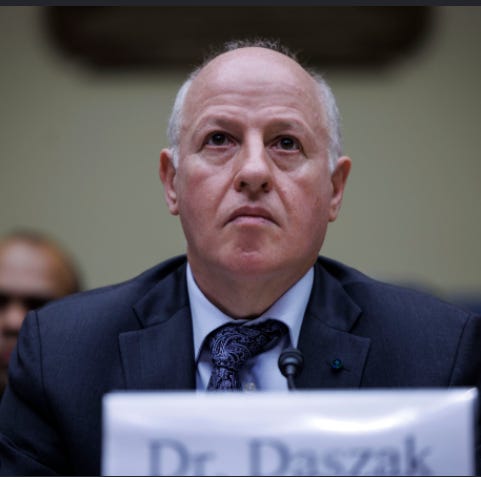
The DEFUSE project aimed to “defuse the potential for spillover of novel bat-origin high zoonotic risk SARS-related coronaviruses in Asia” by getting coronavirus samples from bats, sequencing spike proteins of these coronaviruses, engineering new chimeras that are capable of infecting humans in order to find cures and innoculate wild bats in caves.
DARPA subsequently rejected the proposal due to concerns over gain-of-function research and the fact that the work on viruses would be conducted at Wuhan under inadequate safety conditions in the labs.
Gain-of-function research is when scientists use tools like gene editing or selective breeding to give viruses new abilities or enhance existing abilities. In this context, this is done in order to create more virulent organisms and thereafter finding treatments or vaccines to neutralise them. The goal is to be prepared for a potential pandemic and save lives.
As the Chinese figured out what the Americans were up to, similar multiple projects involving potential gain-of-function research in bat coronaviruses were approved and lavishly funded by the Chinese government. Researchers with the Chinese Military also received grants and tremendous support to carry out such research. The US too responded in turn, by providing large grants in this area of research.
2019
In September 2019, the Chinese database comprising details of the coronaviruses sequenced in Chinese institutes mysteriously went offline. US researchers have been unable to access the database. Peter Daszak testified later that he was informed that access had been removed due to an “alleged hacker attack.”
The first rumours of scientists working inside the Wuhan Institute of Virology “falling sick” began to do the rounds in November 2019.
On December 16, 2019, the first patient with “pneumonia of unknown cause” was admitted at Wuhan Central Hospital.
By December 26, 2019, an elderly couple sought treatment for Covid-19 symptoms at the Hubei Provincial Hospital of Integrated Traditional and Western Medicine.
By December 30, 2019, lab test results showed a virus that was thus far unknown — it was called a “novel coronavirus”.
On the same day, in the US, EcoHealth Alliance’s Peter Daszak wrote on ProMED that unknown pneumonia cases have been found in Wuhan. A scientist Mark Denison sent Ralph Baric an email about respiratory illness in Wuhan.
On December 31, 2019, the Wuhan Municipal Health Commission officially announced that 27 cases had been discovered in Wuhan. The same day, the first expert team from the Chinese National Health Commission arrived in Wuhan.
2020
On January 5, 2020, Fred Hayden, a clinician at the University of Virginia informed Ralph Baric of the University of North Carolina that it was a coronavirus. Hayden told Baric that he got the information from Chinese researchers.
Ralph Baric claimed that he got the Covid-19 viral genome sequence on January 6 or 7, 2020.
On January 12, 2020, Shi Zheng-Li claimed the Covid-19 viral genome sequence was published via WHO.
On February 3, 2020, Shi Zheng-Li and her team published a paper in Nature magazine that the Covid-19 virus sequence was 96.2% identical to the bat coronavirus known as RaTG13. Shi Zheng-Li later claimed that her team did not “isolate” or “culture” the virus and the original bat samples were lost. Only the genome sequence remained.
What The Timeline Tells Us
The timeline of events constructs a picture of two nations racing to beat the other in finding and manipulating coronaviruses to create more dangerous and infectious chimeras.
There was intense research going on in both America and China on coronaviruses and scientists were queueing up for the funding being thrown at them.
The singular point of the lab leak theory is what is called the furin cleavage site which was suspected to have been engineered in a lab by splicing together different viruses.
The furin cleavage site is a specific amino acid sequence on the spike protein of the Covid-19 coronavirus. When the virus approaches a human cell, an enzyme called furin slices the spike protein at a particular point when it recognises that amino acid sequence. Once the human cell’s furin cuts the spike protein, the virus is able to enter the human cell easily, replicate and spread.
In the Covid-19 virus, the sequence of amino acids in its spike protein was too rare for it to have evolved naturally. It was suspected to have been inserted in a lab.
With the Americans and the Chinese furiously funding risky research on coronaviruses in the Wuhan lab, which had lower safety levels than similar labs elsewhere, it was a recipe for disaster.
The frenzy of scientists, the rivalry of two superpower nations and the greed of multiple politicians, academicians and the media built a horrific cocktail in which a deadly virus was born.
This virus caused the deaths of 7.1 million people worldwide. And this is only the official figure from WHO.
The truth is unravelling six years later.
Originally published on Substack. Open the original.
Read the next one by email
Support this work
A UPI payment, if you would like to.